How to Prevent a Tire Blowout in Florida's Heat
By late morning in July, the asphalt on I-4 and SR-434 can run far hotter than the air above it, and every tire rolling across it heats up from the inside out. That mix of Florida heat and highway speed is exactly when a tire blowout is most likely to happen. Learning how to prevent a tire blowout, and knowing what to do if one hits while you are driving near Longwood, keeps an ordinary trip from ending on the shoulder of a busy road. Most blowouts are not bad luck. They trace back to pressure, tread, age, or load, and each of those is something you can check in your own driveway before you ever pull onto Ronald Reagan Boulevard.
Key Takeaways
- Underinflation is the leading maintenance cause of tire blowouts, according to the National Highway Traffic Safety Administration.
- Sustained high temperatures, like a long summer drive on I-4, can deteriorate a tire and lead to a blowout or tread separation.
- Check all four tires plus your spare at least once a month, and always when the tires are cold.
- The correct pressure for your car is printed on the driver-door placard, not on the tire sidewall.
- Replace a tire once its tread reaches 2/32 of an inch, and consider replacing any tire that is six to ten years old regardless of how it looks.
- If a tire blows out, hold the wheel firmly, ease off the gas, and steer straight before you slow down.
What causes a tire blowout?
A tire blowout is a rapid loss of air pressure that can make a vehicle hard to control. Most are the result of tire condition, not a single nail. NHTSA points to poor tire maintenance, "not having enough air in your tires and failing to rotate your tires, among other maintenance requirements," as a direct path to a flat, a blowout, or the tread coming off the tire. Underinflation is the biggest culprit because a soft tire flexes more, and that flexing builds heat until the structure fails. Age and heat matter too: NHTSA warns that sustained high temperature, such as driving long distances in hot weather, can cause a tire to deteriorate and lead to blowouts and tread separation. Add a deep pothole, an overloaded trunk, or a slow leak nobody noticed, and a tire that looked fine in the driveway can let go at 60 miles per hour. The good news is that nearly every one of those factors is visible or measurable before you drive.
Why are blowouts more common in Florida's heat?
Blowouts climb in summer because heat is a tire's hardest working enemy. Central Florida pavement absorbs sun all day, and by afternoon the road surface can be much hotter than the air, so a tire is heated from the road below and from its own flexing as it rolls. That is the "sustained high temperature" NHTSA ties to deterioration and tread separation. The risk is worst on long, fast stretches like I-4, where a tire never gets a chance to cool. Longwood drivers add their own summer patterns on top of that: loaded-down trips to the coast, visitors and seasonal residents putting highway miles on tires that sat unused for months, and older spare tires that only come out in an emergency. A tire that is already a few pounds low starts the drive at a disadvantage, and July heat finishes the job. None of this means summer driving is unsafe. It means the margin for a neglected tire is thinner here than in a cooler climate.
How do you check and set the right tire pressure?
Set your pressure to the number on the driver-door placard, and check it monthly when the tires are cold. NHTSA is specific: "Check the pressure of all tires, including your spare, at least once a month when the tires are 'cold,'" meaning before you have driven and warmed them up. Just as important, the correct pressure is on the vehicle door placard, not the number molded into the tire sidewall, which is only the maximum the tire can hold. Getting this right pays off beyond safety. The U.S. Department of Energy notes that keeping tires inflated to the proper pressure can improve gas mileage by about 0.6 percent on average, and that under-inflation lowers mileage by roughly 0.2 percent for every 1 psi drop across all four tires. In Longwood's heat, check pressure in the morning before the day warms up, and always check before a long drive on I-4 or a loaded trip out of town. A five-dollar gauge in the glovebox does the job better than the eyeball test, because a radial tire can lose a lot of air before it looks low.
What tire warning signs should you watch for?
Watch tread depth, cracks, bulges, vibration, and age, because a blowout usually gives warning before it happens. Check tread with the penny test: insert a penny into a groove with Lincoln's head down, and if you can see the top of his head, the tread is at or below 2/32 of an inch and the tire needs replacing. NHTSA also advises that some manufacturers recommend replacing tires when they are six to ten years old regardless of tread depth, and that guidance matters more in a hot climate that ages rubber faster. Run your hand along the sidewalls for cracks, dry rot, or bulges, since a bulge means the internal structure has already failed. A steering wheel that shakes at highway speed, a tire that keeps going low, or uneven wear across the tread all point to a problem worth fixing now rather than on the roadside. These checks take a couple of minutes, and they matter: NHTSA reported 511 motor vehicle traffic fatalities in 2024 in crashes involving tires or wheels.
What should you do if a tire blows out while driving?
If a tire blows out, hold the wheel firmly with both hands, ease off the gas, and keep the car pointed straight before you try to slow down. The instinct to slam the brakes is exactly wrong, because hard braking with an uneven tire can throw the vehicle into a spin. Let the car slow on its own while you steer toward the right shoulder, then brake gently once you are under control. Signal, get as far off the travel lanes as you safely can, and turn on your hazard lights. On a fast road like I-4 or SR-434, distance from traffic is your safety margin, so aim for an exit ramp or a wide shoulder rather than stopping in a live lane. Once stopped, get out on the side away from traffic if it is safe to leave the car at all, and stay behind the guardrail while you call for help. A calm, straight response in the first few seconds is what keeps a blowout a minor event.
How do you get help after a blowout near Longwood?
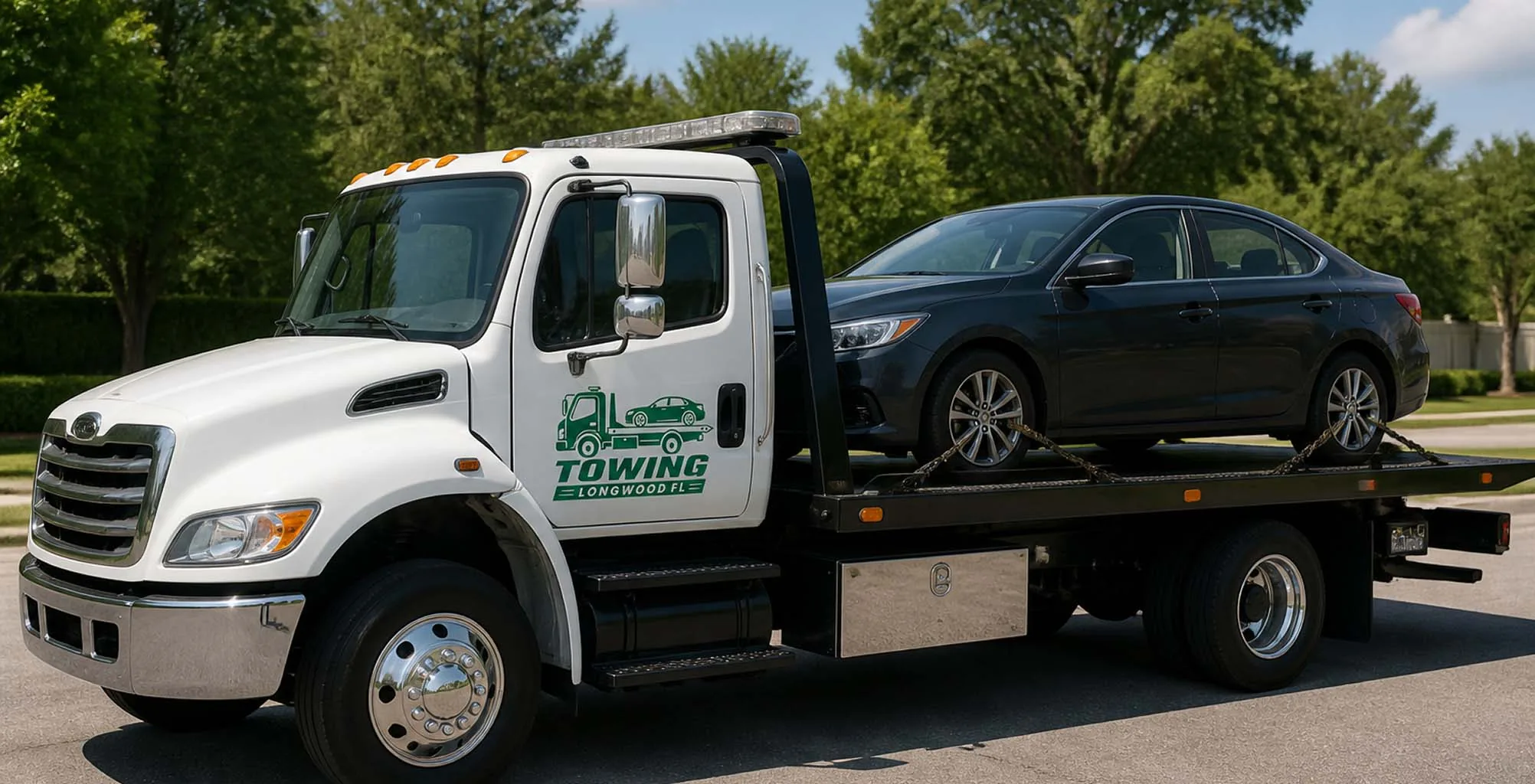
Call for a professional tire change or tow whenever the spare is unusable, the location is unsafe, or you are not confident changing a tire in traffic. Many drivers no longer carry a full-size spare, and a temporary "donut" is not made for extended highway speeds, so a blowout on the interstate often means the car needs to move before it can be repaired. If you are stopped somewhere exposed, changing a tire yards from passing traffic is a real hazard, and it is smarter to wait behind the barrier for help. Longwood Towing runs 24/7 roadside assistance across Longwood, Lake Mary, Altamonte Springs, Sanford, and the rest of Seminole County, including on-scene tire changes and a flatbed tow when the tire or wheel is too damaged to drive on. You hear a flat rate before the truck rolls, not after, so a bad afternoon does not turn into a surprise bill.
Frequently Asked Questions
Can you drive on a tire that blew out?
No, you should not drive on a blown-out tire beyond the short distance it takes to reach a safe shoulder. Driving on the bare rim ruins the wheel and can damage brake and suspension parts, and it leaves you with no control if the road turns. Get off the travel lanes, then change the tire or call for a tow.
How often should I replace tires in Florida's heat?
Replace a tire when its tread hits 2/32 of an inch, but in a hot climate also watch its age. NHTSA notes some manufacturers recommend replacing tires at six to ten years old regardless of tread, because heat and sunlight break down rubber over time. If you are unsure of a tire's age, have it inspected rather than trusting the tread alone.
Does hot weather really increase blowout risk?
Yes. NHTSA warns that sustained high temperature, such as long drives in hot weather, can cause a tire to deteriorate and lead to blowouts and tread separation. Florida's hot pavement and long highway trips make that a year-round concern here, and it is worst for tires that are already underinflated or worn.
Is a blowout covered by roadside assistance?
A roadside assistance visit typically covers changing the flat to your spare on the spot, and a tow if the tire or wheel is too damaged or you have no usable spare. Longwood Towing handles both across Seminole County and quotes a flat rate up front, so you know the cost before the driver arrives.
Related Services
Stuck on the Road in Longwood?
Do not wait it out. Call Longwood Towing and a friendly driver will be on the way, any hour of the day or night.
(407) 863-7547Call (407) 863-7547